* All product/brand names, logos, and trademarks are property of their respective owners.
Some places impress you slowly. Kalam does it almost at once.
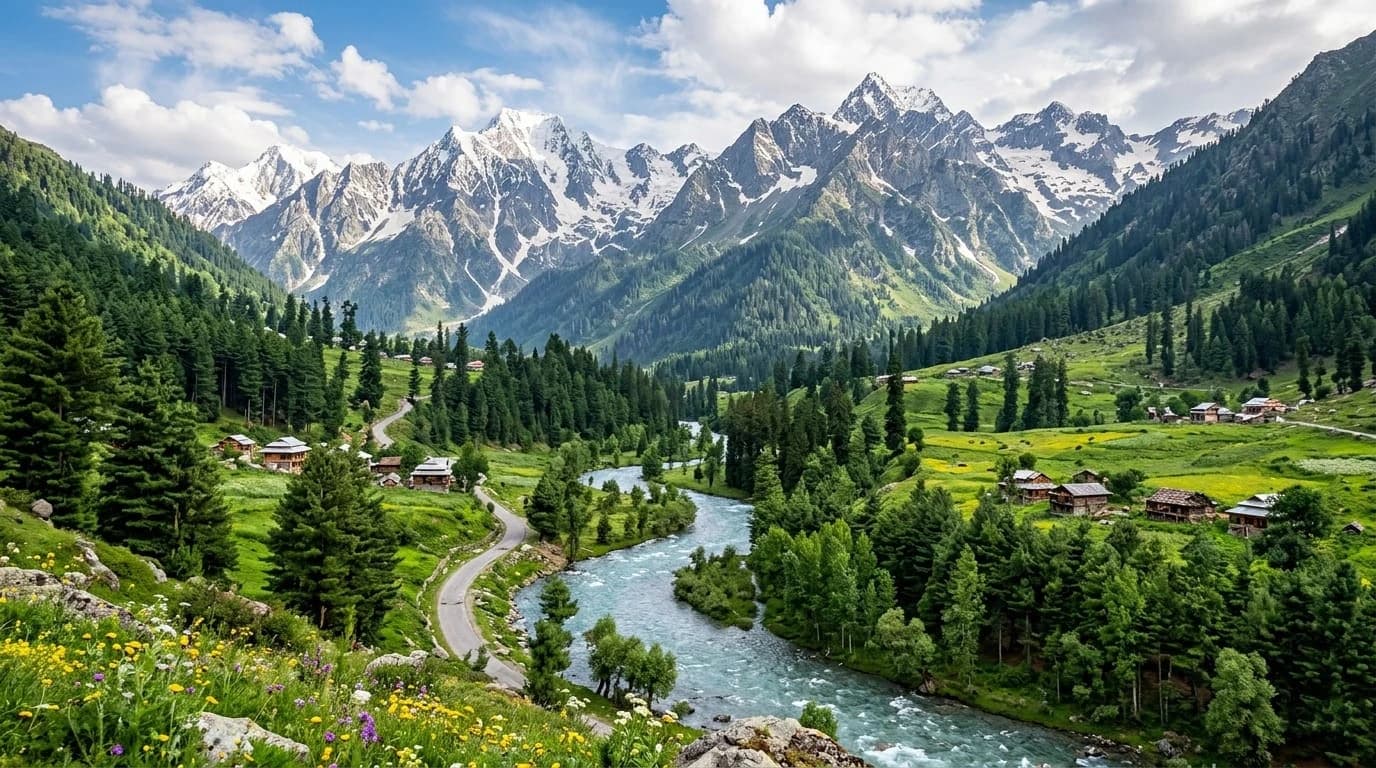
The road curves deeper into upper Swat, the air turns cooler, the river begins to race beside you, and suddenly the landscape feels bigger than your thoughts. Pine trees stand tall on the slopes, mountains rise in layers, and the whole valley carries that clean, open feeling city life usually steals from us. Kalam sits in the northern part of Swat Valley in Khyber Pakhtunkhwa, roughly 96 to 99 kilometers from Mingora, and is widely loved for its river views, forests, lakes, and mountain scenery.
That is exactly why the title “Kalam: Where Beauty Begins” feels right.
Beauty in Kalam does not arrive as decoration. It is the road, the water, the silence, the cold wind, the smell of pine, the changing color of the sky, and the way even a short stop by the roadside can feel memorable. For many travelers in Pakistan, Kalam is not just another tourist destination. It is the point where a trip starts to feel magical.
Kalam is often described as a hill station and a gateway to some of the most stunning spots in upper Swat. The town itself sits at about 2,000 meters above sea level, and the surrounding region climbs much higher into dramatic alpine terrain.
But numbers only tell a small part of the story.
The real charm of Kalam is how it changes your pace. You do not rush through it. You slow down without trying. Morning tea tastes better here. A simple walk feels enough. Even the river seems to set the rhythm. It runs strong and cold, but there is something calming about hearing it all day.
This is the kind of place where people come for a weekend and start planning their next visit before they leave.
Part of Kalam’s beauty begins before Kalam itself.
The drive from Mingora to Kalam follows the Swat River and passes through well-known stops such as Madyan and Bahrain before reaching the valley. The road is one of the main reasons the journey feels special, with riverside stretches, changing elevations, and expanding mountain views along the way.
Anyone who has traveled this route knows the feeling. At first, you keep checking your phone, talking, looking around casually. Then the valley opens up, and your attention shifts. You start looking out the window more. You ask the driver to slow down near the river. You begin noticing the way sunlight falls on the cliffs and the way mist sits over the trees in the early hours.
That is when the trip becomes more than travel.
Not every destination gives you a beautiful arrival. Kalam does.

Kalam has the kind of natural setting that feels complete. It is not only about mountains, and not only about forests. It is the combination that makes it special.
The valley is known for its thick pine forests, glacial streams, alpine meadows, and broad mountain backdrops. Travelers often visit nearby attractions such as Ushu Forest, Matiltan Valley, and Mahodand Lake because each one adds a different layer to the Kalam experience.
That is one of Kalam’s strongest qualities: it does not depend on one season alone.

If Kalam is the welcome, Ushu Forest is the softer conversation that follows.
Located a short distance from Kalam, Ushu Forest is one of the best-loved places in the area, known for its tall deodar and pine trees, fresh air, and peaceful setting. It lies on the route toward Mahodand Lake, which makes it a common and worthwhile stop for travelers heading deeper into the valley.
There is something deeply comforting about forests like this. No performance. No need to “do” anything. You can stand there and feel fully occupied by stillness.
Families stop for photos. Children run ahead. Friends spread out mats and sit with tea. Some people stay quiet longer than they expected. The place has that effect. In cities, silence can feel empty. In Ushu, silence feels full.
For many visitors, this is where Kalam begins to feel personal.

There are beautiful lakes, and then there are lakes that feel unreal the first time you see them.
Mahodand Lake is one of the signature attractions of the Kalam region, located in Ushu Valley at an altitude of around 2,865 meters, or about 9,400 feet. It is known for its turquoise water, surrounding mountains, meadows, and pine-covered edges, making it one of the most photographed and admired places in upper Swat.
And after that, you usually stop trying to describe it.
Some places are best understood through activity. Mahodand is better understood through pause. Sit near the water. Walk slowly. Watch the surface move. Let the cold air do its work. The beauty here is not loud, but it is unforgettable.

Beyond the better-known photo spots, Kalam also offers the kind of scenery that makes travelers feel small in the best possible way.
Nearby places such as Matiltan Valley are known for dramatic mountain views, glacial streams, and high peaks that rise far above the valley floor. Travel guides for the region regularly describe these areas as some of the most striking landscapes accessible from Kalam.
This part of the region gives Kalam depth. It is not only scenic in a soft, relaxed way. It also has grandeur. It has scale. The mountains here do not sit politely in the background. They define the entire experience.
That contrast matters.
One hour you are beside a river in town, sipping tea. A little later you are looking at a valley that feels raw, vast, and almost untouched.
Kalam does not offer one fixed version of itself.
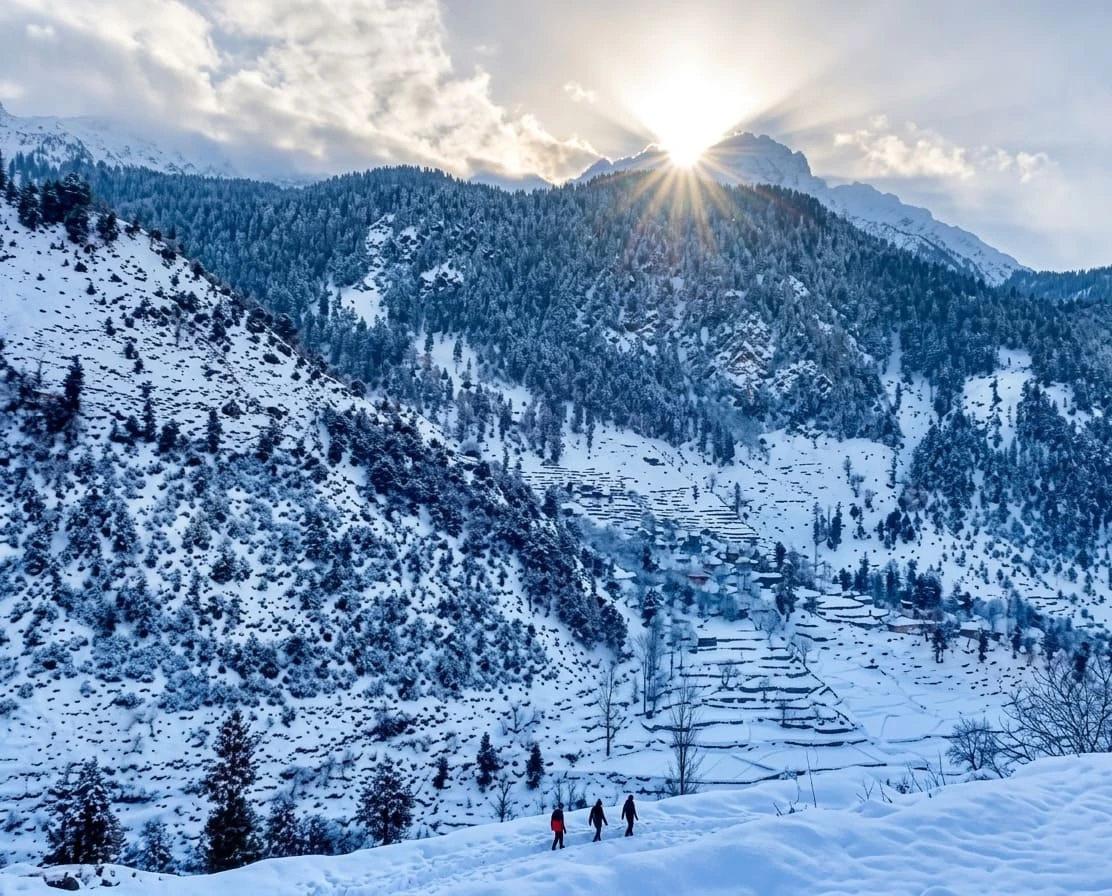
In warmer months, the valley opens up in full color. Meadows brighten, forests deepen, riverbanks become ideal for long stops, and trips to places like Ushu Forest and Mahodand Lake become especially popular. In colder months, snow transforms the landscape and gives the valley a more dramatic, quiet character. The region is widely promoted as a year-round attraction, with different experiences depending on season and road conditions.
That seasonal change keeps Kalam alive in memory. People return and say it looked different this time. Better in some ways. Softer in others. More adventurous. More peaceful.
Very few destinations hold attention after the first impression. Kalam does because it keeps changing while staying true to itself.
Social media has made beautiful places easier to discover, but it has also created a problem. Many destinations begin to feel smaller in real life than they looked online.
Kalam usually escapes that.
Photos can show the lake, the forest, the river, the mountains. They cannot fully capture the feeling of cold air on your face at sunrise, the echo of water through the valley, or the strange calm that comes from sitting somewhere with no rush, no traffic, and no pressure to do anything at all.
That is where the real beauty begins.
Not in a camera roll. In the body. In the senses. In memory.
You may visit Kalam for sightseeing, but you often leave with something softer and deeper than that. A reset. A clear head. A reminder that beauty is not always built. Sometimes it is simply protected, waiting, and generous enough to share itself with anyone who arrives open to it.
Many travelers make the mistake of treating Kalam like a quick stop on a northern tour. It deserves more than that.
It deserves a slow morning by the river. A drive without hurry. A night stay instead of a rushed photo session. A walk through the market. A longer stop in Ushu. An unplanned hour doing absolutely nothing. The valley gives more to people who do not try to control every minute of it.
That might be the most honest thing to say about this place.
Kalam is not beautiful because it tries hard. It is beautiful because it is complete in its own way. Water, woods, peaks, sky, weather, light, and quiet all come together here naturally. Nothing feels forced. Nothing feels artificial. Even the busiest tourist spots still carry traces of something untouched.

Kalam stands out because beauty here is not limited to one famous lake or one scenic point. It begins on the road, grows with every turn of the valley, deepens in the forest, brightens at the lake, and stays with you long after the trip ends. With its location in upper Swat, easy access from Mingora, and famous nearby attractions such as Ushu Forest, Matiltan Valley, and Mahodand Lake, Kalam continues to be one of Pakistan’s most admired mountain destinations.
Some places are visited. Kalam is felt.
And once you have felt it, you understand the title completely. Beauty does not wait at the end of the journey here.
It begins in Kalam.

No bio available yet.
Some places impress you for a few minutes. The Pakistani Northern Areas stay with you long after the
8 April 2026
Be the first to share your thoughts
No comments yet. Be the first to comment!
Share your thoughts and join the discussion below.