* All product/brand names, logos, and trademarks are property of their respective owners.
There are some places in Pakistan that do not feel like tourist spots at all. They feel like pauses in history. You arrive, the air slows down, the noise fades, and suddenly the modern world seems very far away. These are the places where old stones still hold memory, where silence feels heavier than conversation, and where every cracked wall seems to have watched centuries pass.
Pakistan is often celebrated for its mountains, food, and bustling cities, but its quieter historical places deserve just as much love. Beyond the famous landmarks, there are hidden sites scattered across the country that still carry the mood of another age. Some sit deep in deserts. Some rest in forgotten villages. Some stand beneath harsh skies with almost no crowd around them. And all of them make you feel as if time stepped aside and never fully returned.
If you are the kind of traveler who loves stories more than selfies, these places will stay with you.
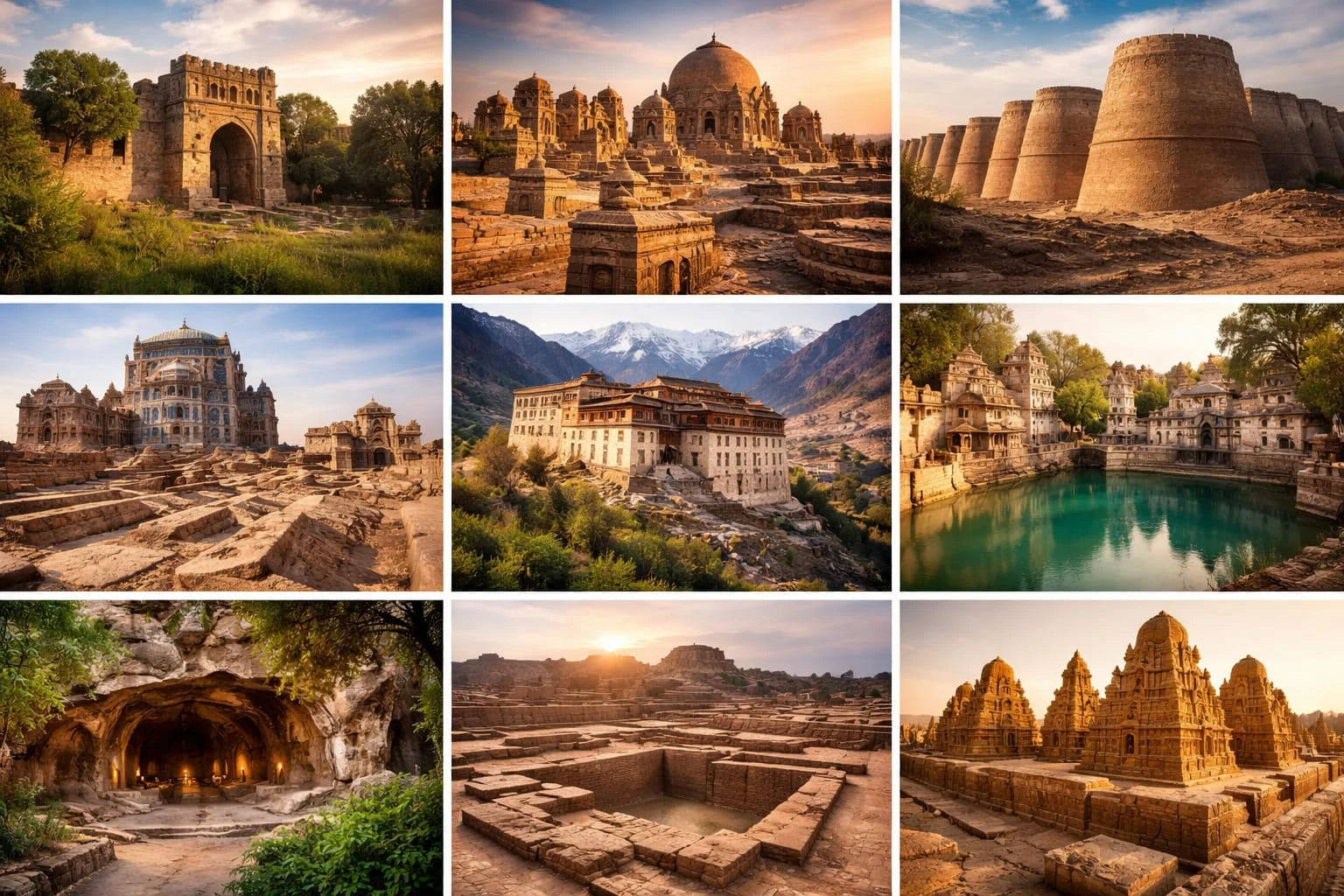
Rohtas Fort is not exactly unknown, but the moment you stand before its massive gates, it still feels strangely untouched by time. Built in the 16th century by Sher Shah Suri near Jhelum, the fort stretches across a strategic hilltop with walls running for more than four kilometers. UNESCO describes it as an exceptional example of early Muslim military architecture in South Asia, and even now it remains astonishingly intact.
What makes Rohtas feel frozen in time is not only its scale, but its emptiness. Unlike many grand monuments that are crowded and over-polished, Rohtas still has a raw, almost stern personality. The giant gateways, silent courtyards, and defensive walls do not feel decorative. They feel purposeful, as if soldiers might still return at any moment.
Walk through Sohail Gate, trace the stone pathways, and look out across the surrounding landscape. You begin to understand why empires valued height, distance, and control. There is no need to imagine the past too hard here. It is already present in the thickness of the walls and the echo of your footsteps.

Makli is one of those places that leaves you quiet. Located near Thatta in Sindh, it is among the world’s largest funerary sites, with tombs and monuments spread across a vast landscape. UNESCO recognizes Makli as a World Heritage Site and links its great monuments to Sindhi civilization from the 14th to the 18th centuries.
At first glance, a city of tombs may sound solemn, even intimidating. But Makli is more than a graveyard. It feels like an open-air archive of art, belief, and memory. The carved sandstone, glazed tiles, Quranic inscriptions, and geometric details are so delicate that they soften the weight of death. Instead of feeling mournful, the site feels reflective.
Standing there, with wind moving across the plateau and rows of old tombs fading into the distance, you feel history in a deeply human way. Makli is not about kings alone. It is about saints, scholars, nobles, and unnamed lives folded into the same earth. It reminds you how temporary power is, and how long beauty can survive.

If Rohtas feels commanding, Derawar feels mythical. Rising dramatically out of the Cholistan Desert in Bahawalpur, Derawar Fort looks less like a monument and more like a mirage that somehow turned solid. Its forty towering bastions can be seen from miles away, and official Punjab tourism sources note that its walls rise up to about thirty meters high.
The setting is what makes Derawar unforgettable. There is something surreal about seeing such a huge fortress in the middle of such a bare landscape. No dense city surrounds it. No modern skyline competes with it. Just desert, heat, horizon, and this giant structure holding its ground.
Derawar feels frozen in time because the desert protects its mood. The emptiness around it creates a sense of isolation that many historical places have lost. When you stand there at sunset, with the fort glowing against the sand and the sky turning bronze, it is easy to believe you have slipped into another century. It feels cinematic, but also completely real.

Uch Sharif is not loud about its beauty. It does not overwhelm you instantly. Instead, it reveals itself slowly through color, texture, and stillness. Located west of Bahawalpur, the town is known for its historic tombs, especially the 15th-century tomb of Bibi Jawindi, along with blue mosaic work that still catches the eye across centuries. Punjab tourism describes it as one of the most ancient towns in the region and an important cultural center in the 13th century.
What makes Uch feel frozen in time is the way faith and history blend naturally there. It does not feel staged for visitors. It feels lived with. You sense that generations have come here not to consume history, but to remain in conversation with it. That gives the town a quiet dignity that is hard to forget.

Hidden in Punjab’s Salt Range, Katas Raj is one of Pakistan’s most layered historical sites. The temple complex is linked to the Hindu Shahis and dates broadly from about the 7th to 10th centuries, according to Punjab tourism sources. Built around a sacred pond and surrounded by old stone structures, the site carries both archaeological and spiritual depth.
What strikes you first is the atmosphere. The temples are not flashy, and that is exactly their charm. Their stone surfaces, weathered stairs, and hilltop setting create a calm that feels ancient. Even if you know little about their mythology, you can sense that this place mattered deeply to generations before us.
Katas Raj feels frozen in time because it holds memory from multiple worlds at once. It is religious, historical, and emotional. It reflects a Pakistan that was always more diverse, layered, and interconnected than many people imagine today. Visiting it feels less like seeing ruins and more like listening to a story that was never meant to end.

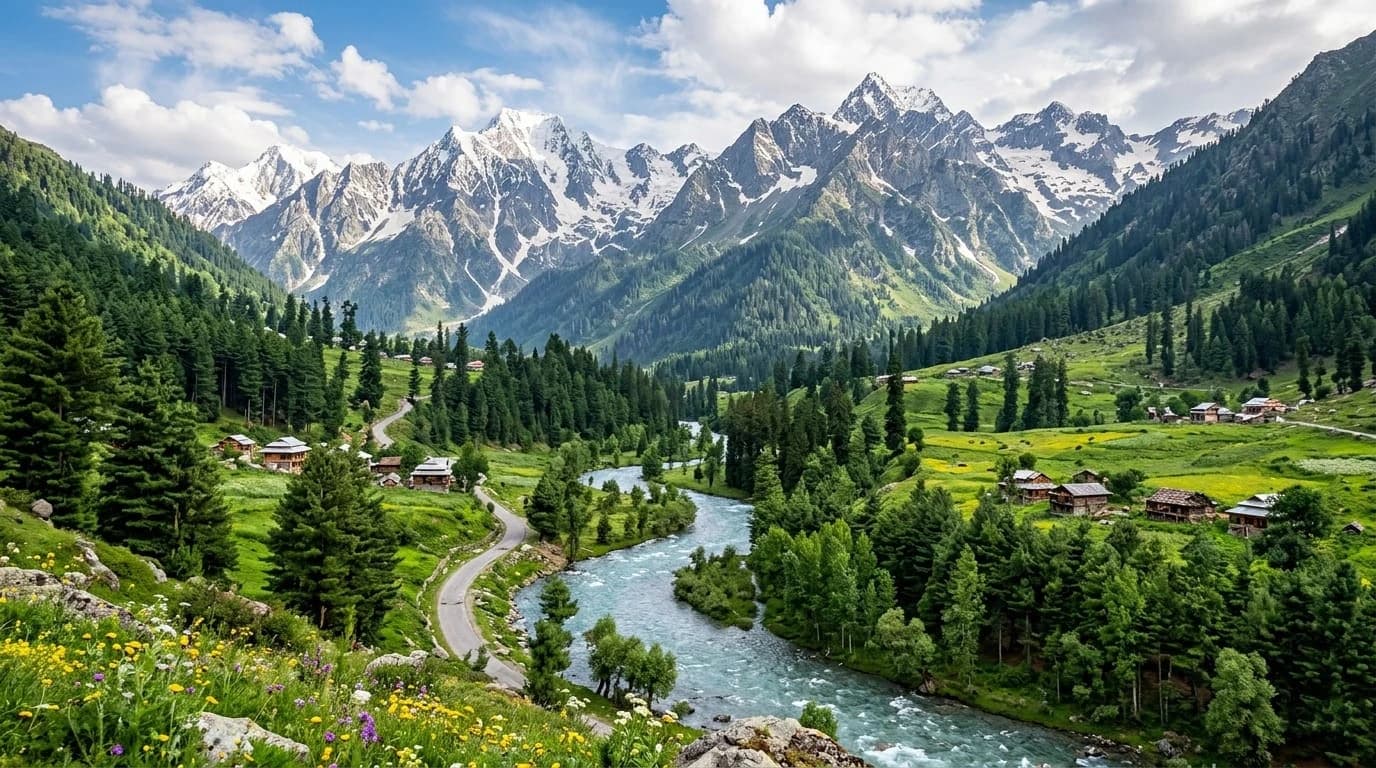
Perched above Karimabad in Hunza, Baltit Fort seems made for people who romanticize the past. The fort is one of Gilgit-Baltistan’s most iconic heritage sites and is known for its centuries-old structure and dramatic mountain setting. Local tourism sources highlight its royal history and commanding views over the valley.
Unlike the harsher mood of desert forts, Baltit feels intimate. It has the warmth of a place where families, rulers, and communities once lived close to the mountains and close to one another. The timber details, narrow passages, and old rooms make it easy to picture everyday life inside.
Yet what truly freezes time here is the backdrop. Snow peaks, deep silence, and the slow rhythm of Hunza make the fort feel suspended between earth and sky. It is not only a historical site. It is a mood. You leave with the feeling that some places preserve not just architecture, but a whole way of seeing the world.

Just outside the usual image of polished Islamabad lies Shah Allah Ditta, a place that feels wonderfully out of step with the capital around it. The caves near the Margalla Hills are widely believed to be around 2,400 years old and are associated over time with Buddhist monks, Hindu ascetics, and Muslim saints.
This site is special because it feels hidden in plain sight. So many people pass through Islamabad without realizing that such an old, layered place exists nearby. There are old rock shelters, traces of frescoes, springs, village lanes, and a kind of rustic quietness that stands in complete contrast to modern roads and sectors.
Shah Allah Ditta feels frozen in time because it is not overly formal. It still feels like a living corner of memory rather than a sealed museum piece. You can sense the spiritual loneliness of the site, the kind of solitude that once drew seekers there. It is one of those places that quietly rearranges your idea of the city itself.

Mohenjo-daro is one of the oldest urban settlements in the world, dating to around 2500 BCE, and remains one of Pakistan’s most important archaeological sites. UNESCO recognizes it as part of the Indus Valley Civilization and one of the earliest planned cities in South Asia.
Yes, it is historically famous, but emotionally it still feels hidden because many people have never experienced it in person. And seeing it physically is very different from reading about it in a textbook. The baked-brick streets, drainage layout, platforms, and remains of homes do not feel primitive. They feel intelligent, deliberate, and eerily familiar.
Mohenjo-daro freezes time in the deepest possible way. It does not take you back hundreds of years. It takes you back thousands. And yet it still feels close, because the city speaks the language of human routine: homes, streets, planning, community. You walk through it and realize that the ancient world was never as distant as we pretend.

Not far from Karachi’s noise and rush lies a site that feels almost secret: the Chaukhandi Tombs. Though less internationally known than Makli, they are remarkable for their carved sandstone grave markers and striking funerary architecture. The site is often linked to the 15th to 18th centuries and reflects local craftsmanship at its most detailed.
The first thing you notice is the carving. Every stone seems touched by patience. Floral patterns, lines, symbols, and layered forms give the tombs a sculptural beauty that feels both fragile and enduring. It is impossible not to admire the hands that shaped them.
What makes Chaukhandi feel frozen in time is the contrast with Karachi itself. You come from a city of speed into a field of silence. It feels like stepping through an invisible door. Suddenly, the pace changes. The air changes. Even your breathing changes. It is proof that historical wonder does not always live far from modern life. Sometimes it waits quietly at the edge of it.

Takht-i-Bahi, near Mardan, is one of the most important Buddhist monastic complexes in the region and is recognized by UNESCO along with nearby Sahr-i-Bahlol. The ruins are famed for their hilltop setting and preservation, offering rare insight into Buddhist architecture in ancient Gandhara.
Takht-i-Bahi feels frozen in time because it was built for withdrawal from the world. That intention still lingers. You do not experience it as a ruin alone. You experience it as silence with structure. And in a noisy age, that can feel almost sacred.

Pakistan’s hidden historical places are not just old sites on a map. They are emotional landscapes. They remind us that history is not dead material locked in books. It survives in stone, wind, dust, prayer, and memory. These places feel frozen in time because they still resist the speed of modern life. They ask you to slow down, look closely, and listen.
And maybe that is their real magic. They do not simply show you the past. They make you feel how alive it still is.

No bio available yet.
Sindh’s story reaches far beyond written records. One of its strongest historical foundations
25 April 2026
Be the first to share your thoughts
No comments yet. Be the first to comment!
Share your thoughts and join the discussion below.